JOIN A GROWING COMMUNITY OF HIGH-PERFORMING COMMERCIAL LEADERS SHARPENING THEIR EDGE IN LEADERSHIP, LIFE AND WELL BEING !
‘ Actionable insights for commercial leaders shaping high-performing teams, making smarter decisions, and thriving in the AI era. ‘
Cognitive Edge Weekly
Published: 12th May 2026
COGNITIVE PERFORMANCE INSIGHT OF THE WEEK
You’re not productive – You’re distracted.

And it’s costing you more than you think.
Every time you switch tasks— your brain doesn’t fully move on.
Part of your attention stays behind. This is ‘attention residue.’
And the impact is brutal:
→ Less focus
→ More mistakes
→ Slower thinking
→ Lower quality work
So while it feels like you’re getting things done— you’re actually operating below your capability.
This is what modern work has become:
– Constant notifications
– Endless switching
– Zero deep thinking
And then we wonder why performance is inconsistent.
Here’s the reality:
You can’t do great work with fragmented attention.
The shift:
Stop managing your time – Start protecting your attention.
Because once your attention improves— everything else follows.
—
Next week: The hidden places leaders are losing cognitive capacity every day.
Cognitive Edge Weekly
Published: 5th May 2026
COGNITIVE PERFORMANCE INSIGHT OF THE WEEK
Leaders aren’t burning out from work – They’re burning out from decisions!

Every decision costs cognitive energy, and here’s what no one tells you…
The more decisions you make… the worse you get at making them.
It’s called ‘decision fatigue’.
Decision fatigue is linked to a measurable decline in decision quality over time, as mental resources are depleted — leading leaders to rely more on shortcuts, avoid decisions, or make lower-quality calls later in the day.
And it’s happening every single day:
– Endless choices
– Constant interruptions
– Back-to-back meetings
By the time a critical decision shows up— the tank is already empty.
So what happens?
→ Slower thinking
→ Safer (worse) decisions
→ Avoidance of hard calls
And performance suffers, but we still measure leaders by:
– How responsive they are
– How available they are
– How much they get through
Not by the quality of their decisions – That’s the mistake.
The shift:
- Stop maximising activity.
- Start protecting decision capacity.
Because great leadership isn’t about making more decisions.
It’s about making the right ones— when it matters.
—
Next week: Why being “busy” is actually destroying your performance.
Cognitive Edge Monthly
MAY 2026
Keywords and Topics Covered:
#ExecutiveLeadership #BusinessStrategy #CognitivePerformance #DecisionFatigue #EconomicUncertainty #MarketVolatility #RiskManagement #OptimizedEvolution #DecisionQuality #MentalBandwidth #CorporateStrategy #FutureOfLeadership
0 Cost
0 Bull Shit
7 Evolution Builds — evidence‑based insights, views and experience, strategies, protocols and thought‑provoking quotes.
Revolutionizing leadership, life and well‑being…..
JOIN A GROWING COMMUNITY OF HIGH-PERFORMING COMMERCIAL LEADERS SHARPENING THEIR EDGE IN LEADERSHIP, LIFE AND WELL BEING !
This Edition
Right now, leaders aren’t just working harder—their brains are operating differently. In a volatile macro environment filled with global conflict, margin pressures, and economic fragility, executive teams have quietly shifted into a permanent state of economic threat detection. But while businesses strictly track financial pipelines and revenue metrics, almost no one is measuring the massive, invisible drain happening right above the shoulders: cognitive fatigue and decision quality degradation.
In this edition, we expose the hidden risk of “Cognitive Drag”—the mental friction that quietly erodes strategic clarity long before the damage shows up on a balance sheet. You will discover exactly what happens to executive thinking under sustained market pressure, why information overload is causing decision paralysis, and how leadership fatigue rapidly infects entire teams.
More importantly, we challenge the outdated operating models that treat mental bandwidth as a wellness issue rather than a core business strategy. Read on to discover the specific questions your leadership team should be asking right now, and learn how protecting your organization’s cognitive capacity can become your ultimate competitive advantage in volatile markets.
Leaders Are Now Operating In A Permanent State Of Economic Threat Detection
For many leaders, the pressure right now isn’t coming from one problem. It’s coming from the accumulation of uncertainty:
- Global conflict and geopolitical instability.
- Persistent economic fragility and margin pressure.
- Supply chain disruption and cost inflation.
- Constant revenue softness and political change.
The Hidden Cost? Cognitive Overload.
The current Middle East conflict is already disrupting global oil supply, shipping routes, and supply chains, with economists warning of ongoing inflationary pressure, slower growth, and increased business volatility.
At the same time, the Australian Federal Budget was delivered against a backdrop of geopolitical instability, productivity concerns, and economic fragility. The Government itself described the environment as one of “higher inflation, slower growth, and extreme economic uncertainty.”
“This matters because leaders are now being forced to make high-stakes decisions while operating under continuous cognitive strain.”

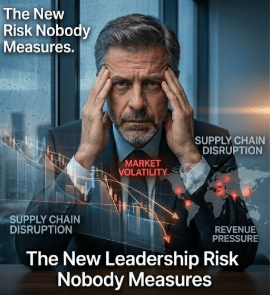
The New Leadership Risk Nobody Measures
Most businesses strictly measure financial performance, pipeline health, and employee engagement.
Very few measure:
- Cognitive fatigue.
- Decision quality degradation.
- Strategic clarity erosion.
- Mental bandwidth depletion.
- Context switching overload.
Yet, these are becoming some of the biggest hidden risks to performance. Because when uncertainty rises, leaders don’t just work harder—their brains start operating differently.
What Happens To Leaders Under Sustained Pressure?
When leaders remain in prolonged uncertainty and threat exposure, a sequence of measurable declines occurs:
1. Decision Quality Drops
The brain starts conserving energy. Leaders default to short-term thinking, “safer” decisions, delaying necessary action, reactive behavior, and reduced strategic creativity.
2. Cognitive Bandwidth Shrinks
Every unresolved issue—revenue pressure, board expectations, global instability—consumes mental capacity. This creates what I call Cognitive Drag: the hidden mental friction that reduces a leader’s ability to think clearly, strategically, and effectively.
3. Signal-To-Noise Ratio Collapses
In uncertain environments, leaders are flooded with meetings, data, noise, urgency, and constant communication. But more information does not create more clarity. It often creates paralysis.
4. Teams Absorb The Leader’s State
Leadership cognition is contagious. If leaders operate in survival mode and constant urgency, teams begin mirroring the same behavior. This is where organizational performance quietly deteriorates long before financial metrics show it.
Why This Matters Now
The businesses that perform best over the next 12–24 months may not simply be the ones with the best strategy. They will be the ones that:
- Protect leadership cognition.
- Reduce organizational complexity.
- Improve clarity.
- Minimise cognitive leakage.
“In volatile markets, clear thinking becomes a competitive advantage.”
Questions Every Leadership Team Should Be Asking Right Now
- Are we operating strategically or reactively?
- Where is cognitive overload showing up in our business?
- Are our leaders making high-quality decisions consistently?
- Is our operating rhythm improving clarity—or destroying it?
- What hidden cognitive cost is current market volatility creating?
Final Thought
Most leaders are still trying to solve modern complexity with outdated operating models. But the future of leadership performance may not belong to the busiest leaders.
It will belong to the leaders who can maintain clarity, strategic thinking, and cognitive capacity during volatility.
“Protecting cognitive performance is no longer wellbeing work. It’s business strategy.”
(Footer Note) Sources Referenced: Australian Federal Budget 2026–27 overview and economic commentary; IMF and industry reporting on Middle East conflict impacts to oil supply, inflation, and global trade.
Cognitive Edge Weekly
Published: 28th April 2026
COGNITIVE PERFORMANCE INSIGHT OF THE WEEK
Your smartest leaders aren’t struggling by accident – They’re overloaded……
And here’s the uncomfortable truth:
The higher the capability… the bigger the drop under pressure.
When cognitive load spikes:
→ Thinking slows
→ Judgement slips
→ Shortcuts take over
That’s when:
– Great leaders make poor calls
– High performers lose their edge
– Teams start drifting
This isn’t a talent issue. It’s what happens when you push the brain past its limits.
Yet most organisations respond by:
– Adding more pressure
– Raising expectations
– Increasing complexity
Which guarantees one outcome – Performance drops.
The shift:
Stop asking leaders to push harder.
Start removing what’s slowing them down!!
Because when you reduce the load— you don’t need to force performance.
It comes back!
—
Next week: Why leaders aren’t exhausted from work—they’re exhausted from decisions.
Cognitive Edge Weekly
Published: 14th April 2026
COGNITIVE PERFORMANCE INSIGHT OF THE WEEK
Leaders are being told to fix strategy. That’s not the real problem – The real problem?
They’re cognitively overloaded!
While organisations obsess over plans and priorities— performance is being quietly destroyed by:
→ Too much complexity
→ Too many decisions
→ Too little mental bandwidth
And the data is clear:
Leadership impact isn’t maximised by better strategy. It’s unlocked by better cognitive conditions.
But most companies are doing the opposite:
– More meetings
– More noise
– More pressure
Then they ask: “Why aren’t our leaders performing?”
Because you can’t think clearly… when your brain is overloaded.
The shift:
Stop upgrading strategy.
Start reducing cognitive load.
Because when the noise drops— performance shows up.
Next week: Why even your best leaders are underperforming right now.
Cognitive Edge Monthly
APRIL 2026
Author: Mike from OE
Keywords and Topics Covered:
#leadership #leadershipburnout #leadershipdevelopment #leadershipskills #mindset #fixedmindset #growthmindset #annualreviews #adaptiveleadership #leadershipstress #oebookclub #stressisenhancing #leadershipperformance #aliacrum #cognitiveload #cognitivedrag #cognitivefriction #yerkesdodsonlaw #workingmemory
0 Cost
0 Bull Shit
7 Evolution Builds — evidence‑based insights, views and experience, strategies, protocols and thought‑provoking quotes.
Revolutionizing leadership, life and well‑being…..
JOIN A GROWING COMMUNITY OF HIGH-PERFORMING COMMERCIAL LEADERS SHARPENING THEIR EDGE IN LEADERSHIP, LIFE AND WELL BEING !
This Edition
The economic environment is making business and leadership ever more challenging right now as most businesses in Australia head into their final quarter of the financial year – pressure on closing out the year strong, performance reviews and updating strategy and financials for the new year all compound to what is one of the most intense times to be a leader in the calendar year.
The cause and effect of the Iran war has not only sent the global price of fuel to record levels, but it has also resulted in serious risk in some countries like Australia of fuel shortages and rationing which in itself is having a ripple effect into supply chains and GDP productivity!
As with poker, leaders have to work out ways to deal with whatever hand of cards they are dealt, so in this edition we explore how you can better manage and avoid ‘leadership burn out’, as well as reframing stress to actually support you to optimise your performance all linked to our continued focus on cognitive load, drag and friction.
We also shine a light on the great work of Alia Crum who through her studies has proven that stress can actually be enhancing and lead to better performance as well as how ‘Yerkes-Dodsons’ law compliments this research finding –
“The Yerkes-Dodson Law tells us stress has a sweet spot. Alia Crum’s research shows that your mindset determines how wide – and how high – that sweet spot is.”
The Organized Mind: Thinking Straight in The Age of Information Overload by David J Levitin is our OE ‘Evolve Pick’ for April which ties in nicely to our theme of that stress isn’t the problem – Overload is!

Why High Performers Burn Out Faster (and How to Fix It)
As we head into the final quarter of the Australian financial year, I’m seeing and hearing leaders and executives dealing with intensity increase as pressure builds to deliver the financial targets, goals of the business and prepare for end of year reviews.
And if that wasn’t enough, in parallel, strategic plans and targets for the upcoming year need to be finalised and cascaded throughout the business for clarity and adoption to ensure future success.
The compounding effect of these business critical activities, coupled with maintaining the normal day to day in an extremely dynamic and volatile economic landscape, are the exact causal factors that generate significant cognitive load which translates into cognitive drag and performance limiting friction.
High performers don’t burn out because they’re doing too much.
They burn out because they misunderstand what stress is doing to them.
Gallup found that burned-out employees are:
- 63% more likely to take sick leave
- 2.6x more likely to actively seek another job
- 23% more likely to visit emergency healthcare
Deloitte estimates burnout costs organisations billions annually through:
- Turnover
- Absenteeism
- Reduced Productivity
Most people are told: stress is the problem. The reality is more nuanced — and far more useful.
Stress, in the right context, is performance-enhancing.
Research from Alia Crum at Stanford University shows that ‘how’ you interpret stress significantly changes its impact. When people view stress as enhancing rather than harmful, they demonstrate:
– Better cognitive performance under pressure
– More adaptive cardiovascular responses (closer to a “challenge” state than a “threat” state)
– Improved long-term health outcomes
Same pressure. Different outcome.
The real issue isn’t stress — it’s where you sit on the curve
There’s a well-established relationship between stress and performance:
Yerkes–Dodson Law states:
At low levels of stress → underperformance (low energy, low urgency)
At optimal levels → peak focus, speed, and execution
At high levels → cognitive decline, poor decisions, emotional reactivity
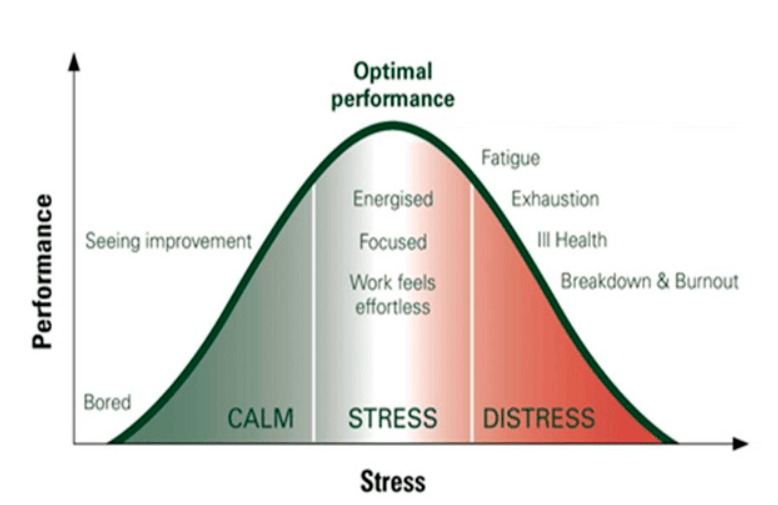
Here’s where it gets real for leaders:
Studies suggest that once you move beyond the optimal zone, you can see:
– Up to 30–40% reduction in decision-making quality under sustained pressure
– Significant drops in working memory capacity (your ability to think clearly in real time)
– Noticeable increases in reactive behaviour vs deliberate leadership
This is where high performers start to feel like they’re “not themselves” — even though they’re working harder than ever.
“The Yerkes-Dodson Law tells us stress has a sweet spot. Alia Crum’s research shows that your mindset determines how wide – and how high – that sweet spot is.”
The pertinent reality for business and leaders is;
‘Decision Quality = Direct Revenue Impact’
According to McKinsey & Company, executives spend ~40% of their time on decision making, yet a large portion of this is inefficient or low value.
Why high performers are more exposed
The very traits that drive success accelerate the slide past optimal stress:
– You take on more → increasing cognitive load
– You stay switched on → limiting recovery
– You push through fatigue → ignoring early warning signs
– You tie performance to identity → making it harder to step back
And critically — you’re often rewarded for it… right up until performance drops.
The shift: from stress avoidance to stress optimisation
Top performers don’t avoid stress.
They train themselves to use it deliberately. That starts with one key reframe:
Stress is not your enemy.
Unmanaged stress is.
When you interpret stress as a resource — something preparing you to perform — your physiology actually supports you:
– Increased blood flow to the brain
– Heightened focus and alertness
– Faster reaction times
But this only works if you stay within your optimal zone.
“Stress can make you stronger, smarter, and happier.”
Kelly McGonigal
3 Ways to Stay There
1. Change your interpretation in the moment Before a high-pressure situation, shift from
“I’m stressed” → “My body is preparing me to perform” (This is directly supported by Crum’s research.)
2. Manage your cognitive load ruthlessly
Your brain has limits. The more decisions, inputs, and noise you carry, the faster you exceed optimal stress.
3. Build recovery as a performance tool
Recovery isn’t optional — it’s what keeps you in the zone where stress works for you.
The goal isn’t to reduce pressure. It’s to operate at a level where pressure sharpens you — not depletes you.
That’s the difference between short-term output… and sustained high performance.
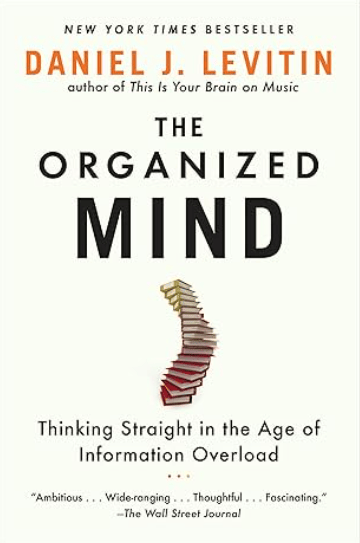
April OE ‘Evolve Pick’ – The Organized Mind
You’re not struggling because you have too much to do.
You’re struggling because your brain is trying to hold too much at once.
The Organized Mind, by neuroscientist Daniel J. Levitin explains why modern work is pushing our cognitive limits—and why more effort isn’t the answer.
Our brains have strict limits when it comes to attention and working memory. When those limits are exceeded, focus drops, decisions degrade, and even simple tasks start to feel harder than they should.
The solution isn’t to work harder or become more disciplined.
It’s to reduce the load.
This book shows how to structure your environment, decisions, and information so your brain can operate at its best—freeing up capacity for what actually matters.
The takeaway: performance doesn’t break down under pressure—it breaks down under overload.
If you haven’t got your copy of Peak Performance yet, head over to the OE Book Club page.
‘ Actionable insights for commercial leaders shaping high-performing teams, making smarter decisions, and thriving in the AI era. ‘
******* END *******
MARCH 2026
Author: Mike from OE
Keywords and Topics Covered:
#cognitiveloadtheory #cognitivedrag #peakperformance #leadership #leadershipstyles #leadershipdevelopment #leadershipskills #mindset #fixedmindset #growthmindset #judgementleader #leadershipsuccess #adaptiveleadership #oebookclub #johnsweller #bradstulberg #stevemagness
0 Cost
0 Bull Shit
7 Evolution Builds — evidence‑based insights, views and experience, strategies, protocols and thought‑provoking quotes.
Revolutionizing leadership, life and well‑being…..
JOIN A GROWING COMMUNITY OF HIGH-PERFORMING COMMERCIAL LEADERS SHARPENING THEIR EDGE IN LEADERSHIP, LIFE AND WELL BEING !
This Edition
This edition we turn the microscope on a hidden problem in most businesses affecting leaders and business performance.
This hidden problem is ‘cognitive load’ and ‘cognitive drag’!
Decision quality doesn’t collapse because leaders lack capability – it collapses because their cognitive bandwidth is saturated.
To clarify and assist you as a leader or leader of leaders, we’ve also included the top 8 causal factors and symptoms of cognitive load and drag to ensure you understand what to look out for.
Peak Performance by Brad Stulberg and Steve Magness is our OE bookclub March pick which we do a deep dive on extracting the key principles and takeaways helping you to ‘elevate your game, avoid burnout, and thrive!
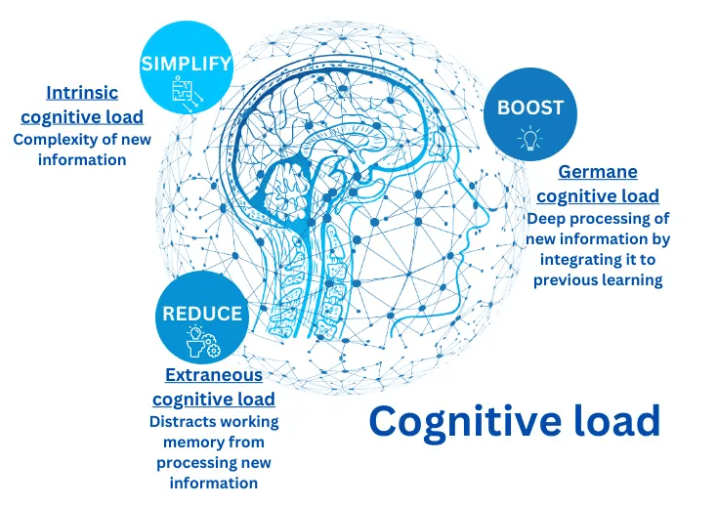
Why Leadership Success Isn’t About Strategy – It’s About Cognitive Bandwidth
Cognitive load is the hidden problem behind most leadership challenges. Neuroscience shows it directly affects decision quality, focus, and decision speed.
Modern leaders often feel overwhelmed – and it’s rarely because of the invisible weight on their mental bandwidth.
The real leadership shift is managing cognitive load and reducing cognitive drag.
What is cognitive load?
Cognitive load theory developed by John Sweller in the 1980’s, explains the amount of mental bandwidth used in your working memory. Because your brain has limited processing capacity, too many demands compete for attention, performance, decision quality and learning decline.
Cognitive drag is the unnecessary mental effort that reduces a person’s cognitive performance.
Think of it as the resistance acting on your brain while trying to think, decide or solve problems.
Think of it like driving a car with:
- The handbrake slightly on
- Tyres under-inflated
- Extra weight in the boot
Your brain needs to work harder just to maintain the same level of performance and with the rate of technology advancements increasing, the causal factors show no signs of reducing!
Modern leaders would experience cognitive drag daily. They probably have no idea as we as humans quickly become victims of our environment.
Although the theory is almost 40 years old, it’s becoming increasingly relevant today because modern work environments are creating unprecedented levels of cognitive load:
Research shows these eight factors drive cognitive drag in modern leadership::
- Decision Overload
- Context / Attention Switching
- Meeting Overload
- Information Fragmentation
- Unclear Priorities
- Interruptions and Notifications
- Poor Org Design
- Time Scarcity
How much is cognitive drag affecting your leadership and/or organisation?
Research by Sophie Leroy on ‘attention residue’ shows that when we switch tasks, part of our attention remains stuck on the previous task, reducing performance on the next.
- Leaders don’t need to work harder …
- Leaders don’t need more resilience ….
Leaders need better systems to minimize cognitive drag!
Even highly capable leaders underperform when cognitive drag is high.
LEADERSHIP PERFORMANCE = CAPABILITY – COGNITIVE DRAG
Key Takeaway:
Leadership performance isn’t usually limited by intelligence or experience. It’s limited by cognitive bandwidth – the invisible resource modern leaders must protect.
“ Our judgements when we are pleased and friendly are not the same as when we are pained and hostile.”
- Aristotle (384 – 322 BC)
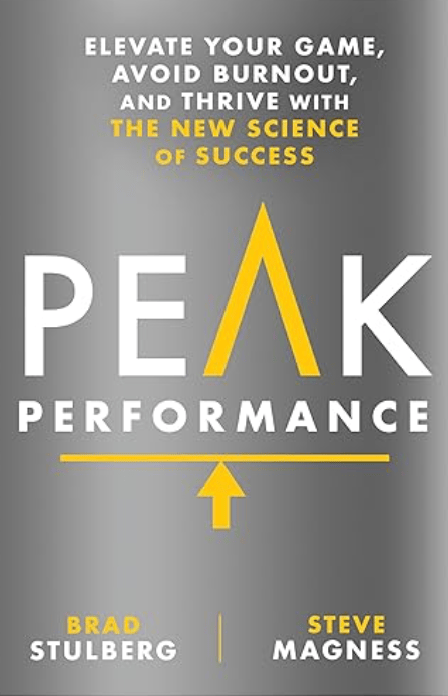
March OE ‘Evolve Pick’ – Peak Performance
If you’re a high performing leader or aspire to be and want to maximize your potential without crashing? Peak Performance by Stulberg and Magness is the book for you…
Stulberg and Magness blend stories from elite performers with scientific research which makes the book an easy read as well as providing credibility and substance to their thinking.
The book highlights that lasting success demands a balance of high-focus work and intentional recovery, driven by meaningful purpose.
The key message for leaders backed by their research…
To enable you to thrive, start embracing a “Stress + Rest = Growth” framework.
If you haven’t got your copy of Peak Performance yet, head over to the OE Book Club page.
Cognitive Edge
‘ Actionable insights for commercial leaders shaping high-performing teams, making smarter decisions, and thriving in the AI era. ‘
******* END *******
FEB 2026
Author: Mike from OE
Keywords and Topics Covered:
#leadership #leadershipstyles ##aileadership #leadershipdevelopment #aiinbusiness #leadershipskills #predictionmachines #airevolution #gartner #mindset #fixedmindset #growthmindset #ailiteracy #rulesbasedai #predictiveai #generativeai #decisionsupport #autonomousai #narrowai #generalai #judgementleader #adaptiveleadership #micromanagers #oebookclub
0 Cost
0 Bull Shit
7 Evolution Builds — evidence‑based insights, views and experience, strategies, protocols and thought‑provoking quotes.
Revolutionizing leadership, life and well‑being…..
JOIN A GROWING COMMUNITY OF HIGH-PERFORMING COMMERCIAL LEADERS SHARPENING THEIR EDGE IN LEADERSHIP, LIFE AND WELL BEING !

This Edition
This edition we will cover off one of the hottest topics in leadership right now – AI!
We specifically explore ‘leader anxieties’ as a result of the AI revolution and what you can do as a leader to overcome them to lead with confidence in an AI world.
We’ve also included our list of the 7 types of leadership styles that will become irrelevant in the AI revolution if those leader types don’t adapt.
Prediction Machines our Feb ‘Evolve Book Pick’ by Ajay Agrawal, Joshua Gans & Avi Goldfarb is summarised which ties nicely into our Feb theme of ‘AI in Leadership’

Leading with Confidence in the AI Revolution
If you’re a leader wondering how you’ll survive the AI Revolution, you’re far from alone.
A recent Gartner report found that while 77% of CEOs believe AI is ushering in a new business era, many feel their leadership teams lack the expertise to execute this transformation.
Leader anxiety often varies by organisation type, size, and structure — whether you’re a large enterprise or a small startup, in finance, healthcare, construction, or people-centric industries like sales and consulting. It also depends on technology maturity, data ownership, and how decisions are made.
Yet beneath all these differences, the anxieties are remarkably consistent:
• Relevance: Will I still be needed?
• Judgment & quality: Will AI trump human decision-making?
• Readiness: Are my people and I equipped to adapt at AI’s pace?
• Data, trust & security: How do we manage ethics, IP risk, and governance?
The biggest question for most leaders today is simple:
“How do I lead with confidence when the ground is shifting beneath me and my own AI capability feels low?”
A Historical Perspective
Every major revolution — from steam power to electricity, computers, and now AI — has forced leaders to rethink their approach.
1. First Industrial Revolution (c.1760–1840): Steam power, mechanised manufacturing, railways – leadership challenges: Managing scale for the first time | Moving people from farms to factories.
2. Second Industrial Revolution (c.1870–1940): Electricity, mass production, telegraph, telephone – leadership challenges: Efficiency, hierarchy, command-and-control
3. Third Industrial Revolution – Digital (c.1950s–2000s): Computers, software, the internet – leadership challenges: Managing information overload | Transition from physical to cognitive work
4. Fourth Industrial Revolution – AI (c.2010s–present): AI, automation, robotics, IoT, biotech – leadership challenges: Ethics, governance, trust and pace | Leading humans alongside machines
What hasn’t changed is that leadership matters most in times of disruption. How you frame change determines your success: Is it a problem, a threat, or an opportunity?
Henry Ford is often credited with saying: “If I had asked people what they wanted, they would have said faster horses.”
The lesson is clear: transformation often requires seeing beyond incremental improvements.
JOIN A GROWING COMMUNITY OF HIGH-PERFORMING COMMERCIAL LEADERS SHARPENING THEIR EDGE IN LEADERSHIP, LIFE AND WELL BEING !

3 Ways Leaders Can Reduce AI Anxiety
At OE, we help leaders navigate AI by changing how they relate to it — structurally, strategically, and psychologically:
1. Mindset: Are you operating with a fixed mindset or a growth mindset? Leaders who embrace growth are better positioned to explore AI confidently.
2. AI Literacy, Not Mastery: You don’t need to code. Understand the types of AI, their uses, and limitations:
• Rules-based AI (Automation)
• Predictive AI (Machine Learning)
• Generative AI
• Decision Support AI
• Autonomous AI (Emerging)
• Narrow AI vs General AI
Being able to name what AI is and is not reduces fear and builds clarity.
3. Shift from “Expert” to “Judgment Leader”: AI can predict, analyse, and generate, but humans still own decisions. Your judgment, ethics, and strategic insight remain irreplaceable.
The Core Reframe
“AI doesn’t remove leadership responsibility — it concentrates it.”
Once leaders internalize this, anxiety decreases, clarity increases, and confidence returns.
“As prediction becomes cheaper, the value of human judgment increases.” — Prediction Machines
In Summary: AI is a tool, not a replacement. The leaders who thrive won’t be the ones who master every AI system — they’ll be the ones who use judgment, ethics, and strategy to amplify the technology.
JOIN A GROWING COMMUNITY OF HIGH-PERFORMING COMMERCIAL LEADERS SHARPENING THEIR EDGE IN LEADERSHIP, LIFE AND WELL BEING !

The Leaders Who Will Become Irrelevant If They Don’t Adapt to AI
AI won’t replace leaders — but it will expose outdated leadership fast.
The following leadership styles are already being quietly outperformed.
1. Command-and-Control Leaders
Leaders who rely on hierarchy, authority, and top-down decision-making will struggle in an AI-driven world that rewards speed, autonomy, and experimentation.
AI rewards: Empowerment over control.
2. “Expert-Only” Leaders
Leaders whose value is based solely on being the smartest person in the room are vulnerable. AI now provides instant access to information and technical expertise.
AI rewards: Judgment, synthesis, and asking better questions.
3. Gut-Feel-Only Leaders
Intuition matters — but intuition without data becomes bias. AI surfaces patterns and insights that instinct alone can’t reliably detect.
AI rewards: Leaders who blend human intuition with data-driven insight.
4. Risk-Avoidant, Status-Quo Protectors
Leaders who prioritise certainty and comfort over learning and experimentation will fall behind as AI accelerates change.
AI rewards: Leaders who test, learn, and adapt quickly.
5. Micromanagers
AI automates reporting, tracking, and optimisation. Leaders whose role is checking work add diminishing value.
AI rewards: Coaching, capability building, and removing barriers.
6. Leaders Who Blindly Trust Technology
Delegating thinking entirely to AI without judgment creates ethical, reputational, and strategic risk.
AI rewards: Human accountability, critical thinking, and responsibility.
7. Emotionally Detached Leaders
As AI handles more technical work, human skills become the differentiator. Leaders who lack empathy, trust-building, and presence will struggle to engage teams.
AI rewards: Emotional intelligence and psychological safety.
In Summary: AI doesn’t eliminate leadership — it raises the standard.
The leaders most at risk are those who:
• confuse authority with leadership
• confuse experience with relevance
• confuse certainty with competence
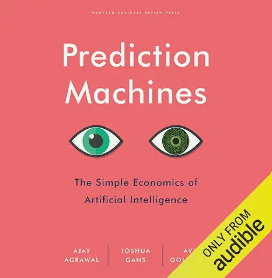
OE Book Club February ‘Evolve Pick’ – Prediction Machines by Ajay Agrawal, Joshua Gans & Avi Goldfarb
Prediction Machines explains how artificial intelligence changes business by dramatically lowering the cost of prediction — forecasting what will happen next. When prediction becomes cheap and abundant, the real value shifts to human judgment, decision-making, and action.
The authors argue that AI doesn’t replace leaders; it reshapes leadership. As machines handle prediction, leaders must focus on setting direction, applying context, managing risk, and making values-based decisions. The competitive advantage moves from knowing the answers to asking better questions and acting decisively on insight.
The key message for leaders:
AI amplifies good leadership — and exposes poor leadership fast.
If you haven’t got your copy yet, head over to our ‘OE Book Club’ page……
********** END **********
JAN 2026
Author: Mike from OE
————————————————————————————————————————
Keywords and Topics Covered:
#grit #angeladuckworth #passion #perseverance #newyearresolutions #habits #disciplines #goals #leadership #priortization #ROI #recognition #praise #gratitude #reflection #journaling #resignation #motivation #leadershipcoaching #MBA #growth #wellbeing #performance #behaviour #research
————————————————————————————————————————
0 Cost
0 Bull Shit
7 Evolution Builds — evidence‑based insights, views and experience, strategies, protocols and thought‑provoking quotes.
Revolutionizing leadership, life and well‑being…..
————————————————————————————————————————

This Edition
This edition we cover off our Jan ‘Evolve Book Pick’ – ‘Grit’ by Angela Duckworth who is the Rosa Lee and Egbert Chang Professor at the University of Pennsylvania and faculty co-director of the Penn-Wharton Behavior Change for Good Initiative.
Grit: The Power of Passion and Perseverance is a #1 New York Times best seller.
With New Year’s resolutions well underway we list ‘The OE Top 10 Leadership New Resolutions to Optimize Your Leadership in 2026’.
JOIN A GROWING COMMUNITY OF HIGH-PERFORMING COMMERCIAL LEADERS SHARPENING THEIR EDGE IN LEADERSHIP, LIFE AND WELL BEING !
OE Book Club – Jan ‘Evolve Pick’

Studies consistently find that New Year’s resolutions fail to succeed with high and increasing drop off rates as the months progress.
One study by the UNSW of 200 new years resolvers found that 77% maintained their pledges for one week, and by mid January, most had given up.
Why is this?
In truth there are multiple factors that affect success rates, but one thing that ‘Grit’ teaches us is that sticking with something to get the outcomes you desire, requires passion and perseverance.
Grit by Angela Duckworth argues that;
Success is driven less by talent and more by a combination of passion and perseverance sustained over the long term.
Duckworth defines grit as the ability to stay committed to meaningful goals despite setbacks, plateaus, and slow progress. Talent may get you noticed, but grit is what carries people through years of effort required to truly excel.
Core Insights of the book is;
- The difference between goals and consistency.
- High achievers don’t constantly change direction
- They align daily habits and short-term goals to a single long-term purpose.
- Duckworth shows that effort counts twice—talent × effort builds skill, and skill × effort leads to achievement—making persistence more powerful than raw ability.
JOIN A GROWING COMMUNITY OF HIGH-PERFORMING COMMERCIAL LEADERS SHARPENING THEIR EDGE IN LEADERSHIP, LIFE AND WELL BEING !
————————————————————————————————————————
The OE Top 10 Leadership New Resolutions to Optimize Your Leadership in 2026

Here are Top 10 Leadership Resolutions for 2026 — practical, modern, and aligned with high performance, resilience, and sustainable leadership:
1. LEAD YOURSELF FIRST
Build consistent habits around sleep, movement, recovery, and focus. Personal energy is now a leadership competency.
A healthy and happy leader is an effective leader.
2. MASTER DECISION-MAKING UNDER PRESSURE
Slow down when it matters most. Use fewer inputs, clearer principles, and decisive action—especially in uncertainty.
Leverage the double inhale and one exhale for emotion regulation.
3. REPLACE BUSYNESS WITH IMPACT
Ruthlessly prioritise outcomes over activity. Measure success by value created, not hours worked.
Regularly review your schedule and any ‘non value adding’ activity be ruthless and remove.
4. BUILD PSYCHOLOGICAL SAFETY ON PURPOSE
Create environments where people can speak up, disagree, and learn fast without fear.
Try this over the next week and journal the impact it has.
5. COACH MORE THAN YOU DIRECT
Shift from problem-solver to capability-builder. Ask better questions; give fewer answers.
Understand ‘Socratic’ questioning to be fully effective.
6. DEVELOP ONE SUCCESSOR
Commit to developing at least one person who could step into your role. Leadership is leverage.
It’s hard for you to progress your career without a successor so invest the time to ensure when opportunities arise you are able to seize them.
7. GET COMFORTABLE WITH HARD CONVERSATIONS
Address issues early, clearly, and respectfully. Courage beats comfort every time.
Plan for these and always have facts to back up any contentious topics.
8. PROTECT DEEP WORK TIME
Block uninterrupted thinking time weekly. Strategic thinking doesn’t happen between meetings.
Deep work can involve reading to stay up to date with key topics and ensure you are as skilled as you can be.
9. LEAD THROUGH CHANGE, DON’T JUST MANAGE IT
Anchor teams with clarity, meaning, and calm when things are moving fast.
Communicate, listen – repeat.
10. DEFINE YOUR LEADERSHIP LEGACY
Decide what you want to be known for—how people felt, grew, and performed under your leadership.
Spend time reflecting on this and journal your thoughts to then incorporate into your plan.
Evolution is there for optimizing …. Thanks for taking the time to invest in your evolution!
——————– END ——————–
JOIN A GROWING COMMUNITY OF HIGH-PERFORMING COMMERCIAL LEADERS SHARPENING THEIR EDGE IN LEADERSHIP, LIFE AND WELL BEING !
Cognitive Edge
DEC 2025
Author: Mike from OE
Keywords and Topics Covered:
#atomichabits #jamesclear #habits #disciplines #goals #leadership #priortization #ROI #recognition #praise #gratitude #reflection #journaling #resignation #motivation #leadershipcoaching #MBA #growth #wellbeing #performance #behaviour #research
0 Cost
0 Bull Shit
7 Evolution Builds — evidence‑based insights, views and experience, strategies, protocols and thought‑provoking quotes.
Revolutionizing leadership, life and well‑being……
This Edition
This edition includes our Dec ‘Evolve Book Pick’ – Atomic Habits by James Clear who is a New York Times bestselling author and behaviour-change expert.
We also cover our ‘OE Seven ‘R’s of Christmas’ which is a must read for any high performing leader as well as the top 3 ‘must haves’ to look for in a leadership coach including some recent meta analysis research findings on the benefits of a coach.
OE Book Club – December ‘Evolve Pick’

With Christmas and 2026 fast approaching, our evolve pick for December Atomic Habits by James Clear couldn’t be timed better!!
Not only does he illustrate the power of habits and discipline, but it exemplifies how by doing small things often can have a massive impact allowing you to achieve your goals…. evolving, optimising and revolutionising your leadership, life and well being.
Whether or not you need resolve to avoid over indulgence or guidance to achieve and sustain New Year’s resolutions this easy read has the potential to be life changing.
Clear’s approach is practical, science-backed, and incredibly easy to apply — perfect for ending the year with intention and setting up 2026 for stronger performance, healthier routines, and unstoppable momentum.
‘Habits are the compound interest of self-improvement’ – James Clear
JOIN A GROWING COMMUNITY OF HIGH-PERFORMING COMMERCIAL LEADERS SHARPENING THEIR EDGE IN LEADERSHIP, LIFE AND WELL BEING !
______________________________________________________________________________________

The 7 MUST KNOW ‘R’s of Christmas and New Year Leadership
Seasoned leaders will know that whilst most have dreams of gently sliding into the Xmas period, looking forward to a well earned break and time with family that in reality this dream is exactly that a dream!!!!
Well like the ‘Twelve Days of Christmas’ the team @ OE have developed the ‘Seven ‘R’s of Christmas….
Refocus – As December begins, always refocus on the key priorities to be delivered before the Xmas break and make sure your team has clarity on what’s expected and by when. This ensures deadlines are met, the year is closed off with no open ends and you can start the new year fresh and on top of things. The impact this can have to mindset is huge!
Re-Order – Where and when you and your team will spend your time and on what topics. Time is always a precious commodity and maximum ROI vs effort should always be the focus. Avoid travel if you can and ensure collaboration is planned early to avoid missing people if they go on leave early.
Remove – Any noise and tasks that will distract you and your team and that could inhibit you delivering on the important priorities.
Recognise – Start to highlight key wins and recognise individuals for the hard work that they have delivered throughout the year. Praise and gratitude cost nothing but can deliver long lasting and impactful results.
Reflect – Take time over the break when the day to day chaos is switched off to pause and reflect by journaling on the year that has been and the year that will be. Use this time to give yourself clarity as to what the new year will bring, how you want to show up as a leader, the priorities for your team and any development that’s needed.
“Follow effective action with quiet reflection. From the quiet reflection will come even more effective action,” – Peter Drucker
Risk of Resignation – a 2019 survey by Robert Hall identified that 54% of managers had an employee resign 1 month after returning from leave. Over extended breaks, especially around new year, people are more likely to reflect on where they are at and decide they want to make a change. You can minimize this risk by connecting with your team, recognising their achievements, providing them clarity on their purpose and expressing how important they are to the companies overall purpose.
Refresh – above all as a leader, you do it tough….. Motivating not only yourself but others daily is tiring. So make sure you get the rest you need. Switch off, relax, read a book, exercise, see new places, connect with family and friends. Whatever you need to do to refresh make sure you prioritize this to ensure you come back in January ready to go again!
JOIN A GROWING COMMUNITY OF HIGH-PERFORMING COMMERCIAL LEADERS SHARPENING THEIR EDGE IN LEADERSHIP, LIFE AND WELL BEING !
______________________________________________________________________________________
New Year – New You!
The OE 3 Must-Haves to Look for in a Coach
1. Experience & Credibility
If you want confidence that your investment will generate real results—rather than money wasted—review the coach’s academic achievements and professional experience.
Don’t be deterred if case studies or testimonials aren’t available yet; many highly capable coaches are early in their practice.
Strong academic foundations (such as an MBA) combined with significant leadership experience should give you confidence that they have the skills and know-how you’re seeking.
2. Subject Matter Expertise
If you’re a middle manager, hiring a C-suite executive coach is unnecessary—and expensive.
Look for leadership or executive coaches whose programs align specifically with your level, goals, and challenges.
If you’re unsure, narrow down a shortlist and book a free discovery call to confirm fit. This alone can give you 100% clarity.
3. Minimum 6-Month Commitment
Be cautious of any coaching program promising rapid results.
———- Growth that sticks takes time ———-
Choose a minimum 6-month program (or longer), and be clear on the areas you want to focus on so you and your coach can agree on the ideal duration for meaningful progress.
Time to get serious about evolving your leadership, life, and wellbeing.
It’s now well-documented that working with a coach can significantly enhance performance, accelerate growth, and create better outcomes—for individuals who are serious about elevating themselves to the next level.
A recent meta analysis published in the peer reviewed journal ‘Frontiers in Psychology’ in June 2023, found that coaching (especially executive coaching) leads to ‘significant positive changes in behaviour, attitudes, goal setting, and performance-related behaviours ‘
What are you waiting for …. head over to our ‘Evolve Programs’ page and start ‘Optimizing your leadership evolution today’!
Evolution is there for optimizing …. Thanks for taking the time to invest in your evolution!
JOIN A GROWING COMMUNITY OF HIGH-PERFORMING COMMERCIAL LEADERS SHARPENING THEIR EDGE IN LEADERSHIP, LIFE AND WELL BEING !
——————– END ——————–
Cognitive Edge
Nov 2025
Author: Mike from OE
Keywords and Topics Covered:
#Presentation skills #Confident communication #Executive presence #Storytelling for impact #Audience engagement #Speaking with influence #Leadership communication #Presentation mindset #Visual storytelling #Message clarity
0 Cost
0 Bull Shit
7 Evolution Builds — evidence‑based insights, views and experience, strategies, protocols and thought‑provoking quotes.
Revolutionizing leadership, life and well‑being……
This Edition
This edition covers why presentations fail, how to avoid the common pitfalls, and what presenters can do to evolve their public speaking, presentation skills and executive presence.
The Scenario
Four days before a high‑stakes customer presentation—more than 12 months in the making—the National Account Manager leading the project called a meeting to review progress.
Within minutes, it became clear that the presentation was nowhere near ready. Critical content was missing, objectives weren’t aligned, and roles for the upcoming session were unclear.
The next hour was spent rebuilding the entire presentation from scratch.
Situations like this create unnecessary pressure, damage trust, and can be career‑limiting. They also raise important questions:
- Was the work started too late?
- Were the right stakeholders engaged early enough?
- Was there unconscious incompetence at play?
This newsletter outlines seven evolution skill builds that prevent these scenarios and dramatically improve presentation outcomes.
“Most presentations are too long because presenters are too weak to make them short.” — Guy Kawasaki
JOIN A GROWING COMMUNITY OF HIGH-PERFORMING COMMERCIAL LEADERS SHARPENING THEIR EDGE IN LEADERSHIP, LIFE AND WELL BEING !
The 7 OE Skill Builds for Successful Presentations
1. Plan and Align All Key Stakeholders Early
Why: Early alignment ensures clarity on objectives, agenda structure and expectations. It also secures buy‑in and avoids rework.
OE View: Missing this step increases misalignment, slows momentum and drives late‑stage scrambling. Always clarify what’s in scope vs out of scope.
Action: Schedule stakeholder alignment within 24–48 hours of receiving the meeting date.
2. Build Content with the Audience in Mind
Why: Presentations fail when the content doesn’t connect with the audience.
OE View:
- Visuals are processed far faster than text (commonly cited: 60,000x faster).
- Retention of visual content significantly exceeds text‑only material.
- Speak with future audience members or key representatives before building content to understand what they want.
Action: Validate audience expectations early and adjust your approach accordingly.
3. Use Time Allocation to Guide Slide Quantity
Why: Too many slides for the available time creates rush, stress and loss of clarity.
OE View:
- Pure presentation: ~1–3 minutes per slide (more for detailed content).
- Small group meeting: Fewer slides, more conversation.
- Conference: 1–2 minutes per slide; avoid excessive detail.
- Internal meetings: Sharp, punchy slides with detail in the appendix.
- External customer meetings: Prioritise dialogue over slide volume.
Action: Build time first, slides second.
4. Schedule Check‑Ins and Working Sessions
Why: Content naturally evolves—and can easily drift off‑course—without regular alignment.
OE View: As content grows, narratives can become confused. Always ask: Does this align to the original brief and drive the outcome we want?
Action: Lock in 2–3 structured check‑ins before finalisation.
5. Narrative, Narrative, Narrative
Why: Story‑structured presentations are significantly more memorable than facts alone.
OE View: Open with a relatable human moment or a short story to emotionally connect the audience. Alternatively, use three powerful facts to create impact early.
Action: Write your narrative first; add data second.
6. What’s In It for the Audience?
Why: If the audience doesn’t hear something relevant to them early, you will lose them—attention drifts, phones come out, and engagement collapses.
OE View: Understand their pain points, interests and expectations. Tailor content to what matters most to them.
Action: Start every presentation by answering: Why should they care?
7. Run‑Through and Roles
Why: Practice strengthens neural circuits that support recall under pressure and reduces anxiety.
OE View:
- Know your content, know your slides and anticipate questions.
- Practice reduces activation in the brain’s fear centre, lowering anxiety.
- With ~70% of people reporting a fear of public speaking, rehearsal is a competitive advantage.
Action: Conduct at least two full run‑throughs and clarify roles for multi‑presenter sessions.
“Integrate even one build this month and your next presentation will noticeably improve.”
Evolution is for optimising – Thanks for investing in your evolution – The OE Team
Leave a Reply